when building patio what do you place next to the bricks on the end to keep bricks in place
This postal service may contain affiliate links. If y'all click an affiliate link and make a purchase, I may earn a commission. Also, as an Amazon Associate I earn from qualifying purchases.
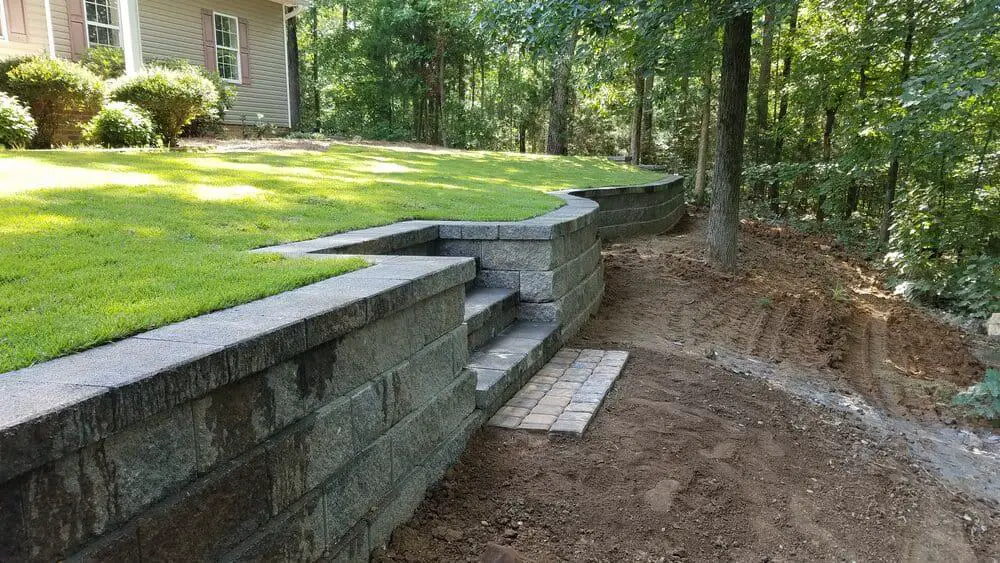
Building a paver patio on sloping ground is not as daunting of an undertaking as many people recollect.
The trickiest part of the project will be getting access to your yard to begin construction, but if you can get that far there'south no need to worry about what lies ahead.
I tin can't begin to tell you lot how many times I take been told past friends and family that they want a patio, but their grand is non flat.
Sloping yards are an obstacle for almost homeowners who considering adding a paver patio or whatever blazon of outdoor living space because the slope oftentimes creates drainage problems.
There will exist water accumulation on one side of the area versus the other if it slopes downhill.
The good news is there are solutions!
Today we're going to cover 3 ways you could build your dream patio fifty-fifty if your lot has some uneven terrain and all those pesky drainage issues too:
sloped ground (lots), retaining walls, and terraced patios with steps/stairs. Each solution will have its own pros and cons, but you can notice one that suits your needs.
Here are some tips for how to build this blazon of patio in your backyard:
5 Methods To Build A Patio On A Sloped Yard
ane. Sloped ground (lots)
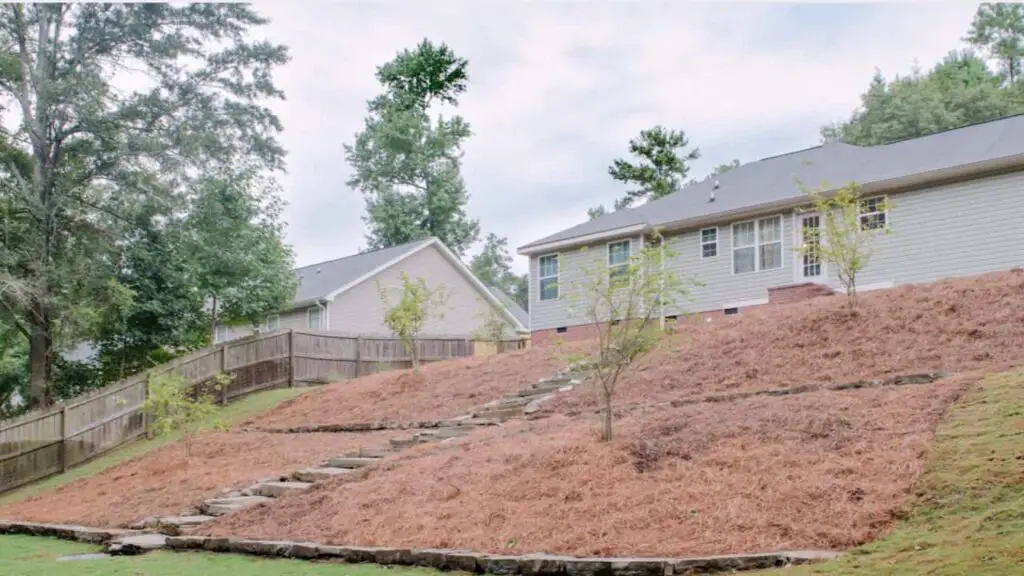
This is where the state slopes down from left to correct. If you want a patio in your backyard, you lot will either demand to carve out an expanse that's level enough for physical or pour a slab on top of the gradient and then build upward with bricks around it.
A lot of people don't like this because it requires consummate removal of existing vegetation before edifice begins.
The solution might include retaining walls–nosotros'll talk about those later–or terraced patios with steps/stairs which crave less excavation merely more structure time and materials.
2. Retaining Walls
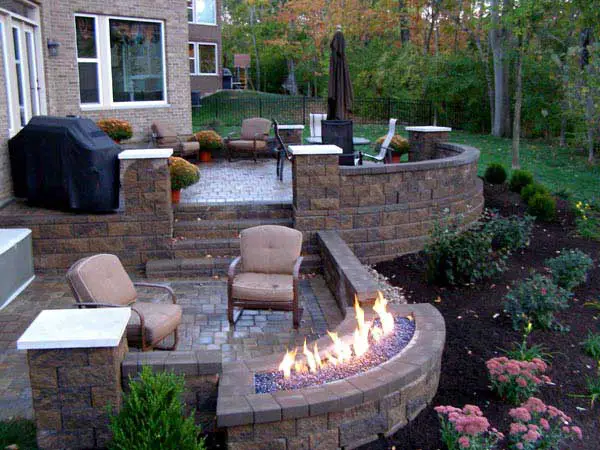
If your yard has some areas that are gentle sloping downhill towards other steeper sections beneath them, installing a retaining wall along the downhill section will help with drainage.
This is a skilful solution if your grand slopes down on both sides and h2o run off the college side while pooling up near the lower cease of the slope.
3. Terraced Patios
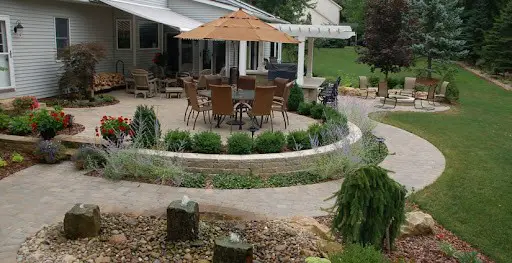
This can be accomplished past building earth to create steps that pb downward or stairs for a more gradual alter in level.
The pinnacle platform of each step needs to be big enough for you to walk effectually comfortably so it's important non only how high but likewise how wide they are going to be.
Materials used should include something similar brick pavers (or stone), concrete, bricks, flagstone–whatsoever blazon you prefer!
Terrace patio solutions work well because at that place is minimal excavation required and construction time does non take too long.
4. Steps/stairs
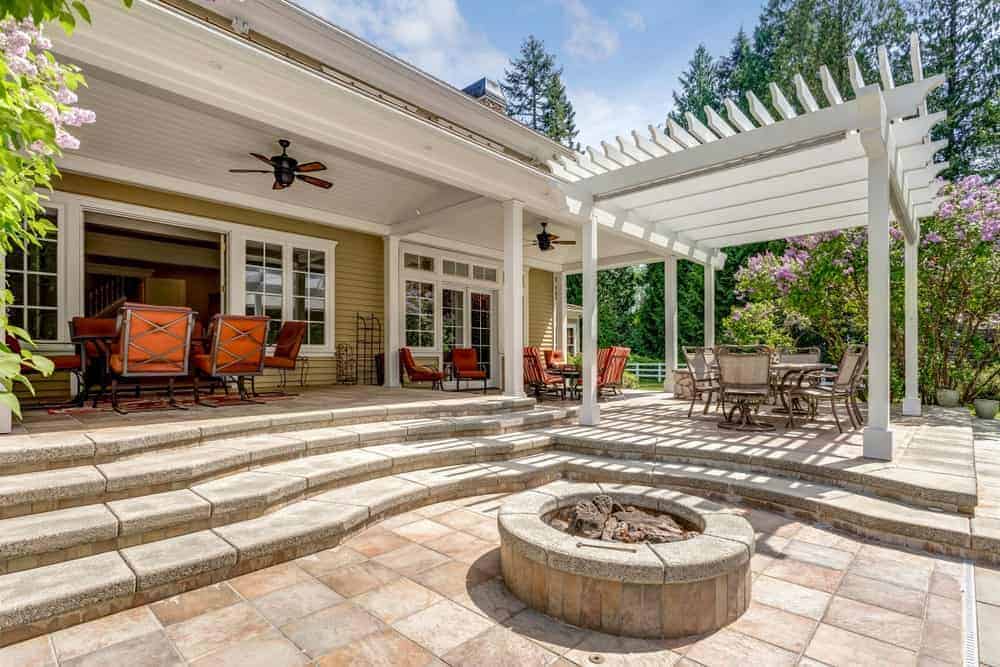
This is an excellent solution for a sloping 1000 because it provides the well-nigh gradual descent of all three solutions, which besides makes information technology easier to walk effectually on.
If you are using steps or stairs in lieu of world and retaining walls for your slope, they need to be wider than the step below them so that at that place's enough room for something
similar pavers or concrete to sit between the risers (or ledges) before installing another one higher upwards–
I'll prove examples afterwards! Keep in mind that if your drainage problem was from water pooling at the lesser end of a gradient, adding steps will only reroute flow away from that expanse towards other parts where moisture may accrue too.
So make certain the gradient is gentle enough and has a grade low plenty to avoid that problem.
five. Risers (or ledges)
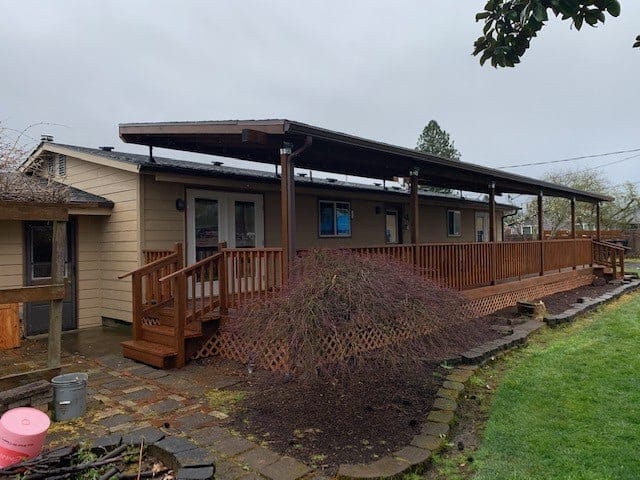
Stepped areas can exist completed with risers or ledges which are basically horizontal surfaces installed between each stride toward one side of information technology, oftentimes at an angle.
They provide support for materials on top similar concrete pavers, stone slabs, bricks–whatever you're using!
Installing them will help distribute weight evenly so in that location's less chance of erosion from pelting/snowfall runoff over time besides.
You'll need access to all sides in guild to install these considering they go upward against the surface material used likewise equally where water drainage occurs when walking downwards steps.
If your abode does non have such access then some other type of wall may exist necessary.
Steps: For Edifice a Paver Patio On A Sloped G
Layout Patio Size
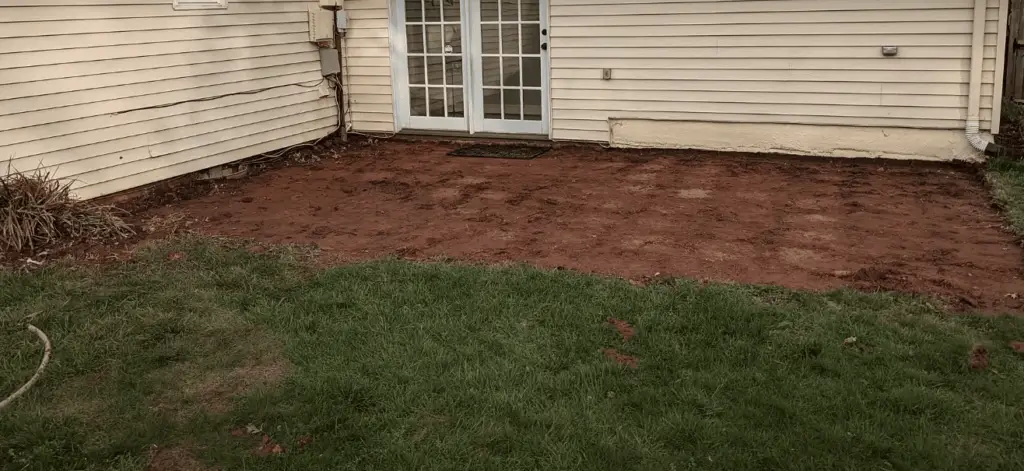
Mark the area where your patio will be by using a garden hose and string.
Stretch the hose from one end of your yard to another, so lay cord forth its length at about 18 inches apart; this is an approximation for how far paver blocks are spaced when placed together.
If you accept copse or big rocks in that infinite, mark their location with stakes so they don't get covered upward or damaged during building.
If at that place's whatever doubtfulness as to what size patio you need, mensurate out the measurement of your desired paving stones (usually twelve inches broad) on graph paper beginning and cut it
into squares, matching them to make sure they fit well before mark out your last measurements.
Y'all can also use a pre-drawn blueprint from a patio company for this.
Excavate
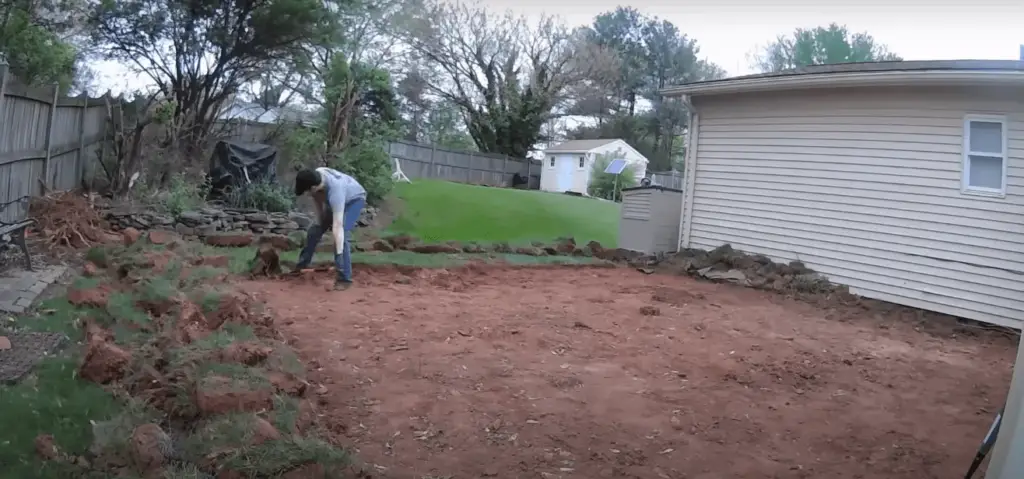
Excavate the ground where your patio will get, using whatever excavation tools yous have available to dig out all of the cloth that'southward in there.
Make certain it's deep enough and then y'all can stack two paver blocks on acme of each other with space between them; these are chosen "risers."
Use a sledgehammer and stake if necessary to make big rocks fit into place as they were earlier digging started.
Utilize an excavator or some other heavy machinery to remove stubborn obstacles, like boulders or trees, which may be preventing rainwater from running off properly and pooling up around your home later on on during storms.
Lay a Base
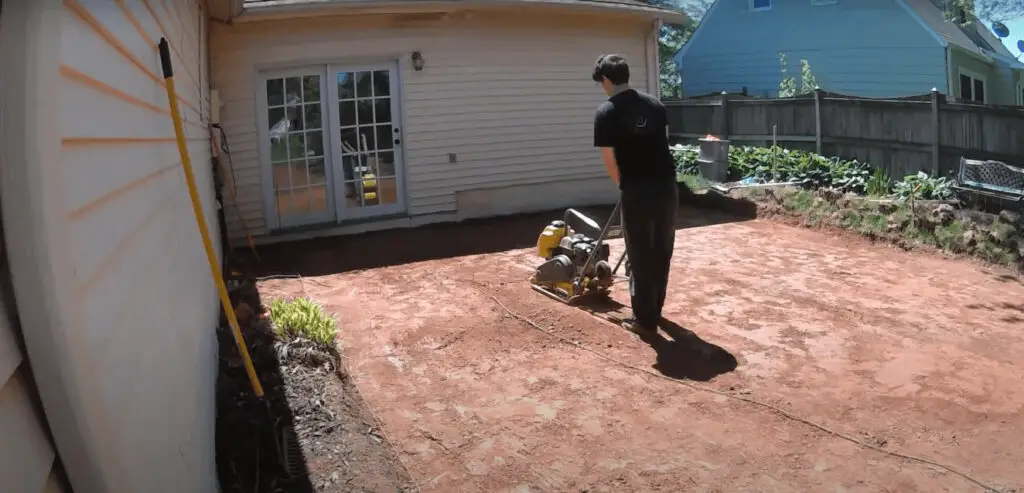
Lay a layer of gravel for drainage in the area where your patio volition go.
Make sure it's nearly two inches thick, or whatever thickness is specified by whichever company you lot purchase this material from; make sure they tin give y'all authentic advice
on how deep to dig earlier applying and which type of soil to use as well!
After that, comprehend up with dirt once again (this time using salubrious topsoil) and rake out until level.
Lay Pavers
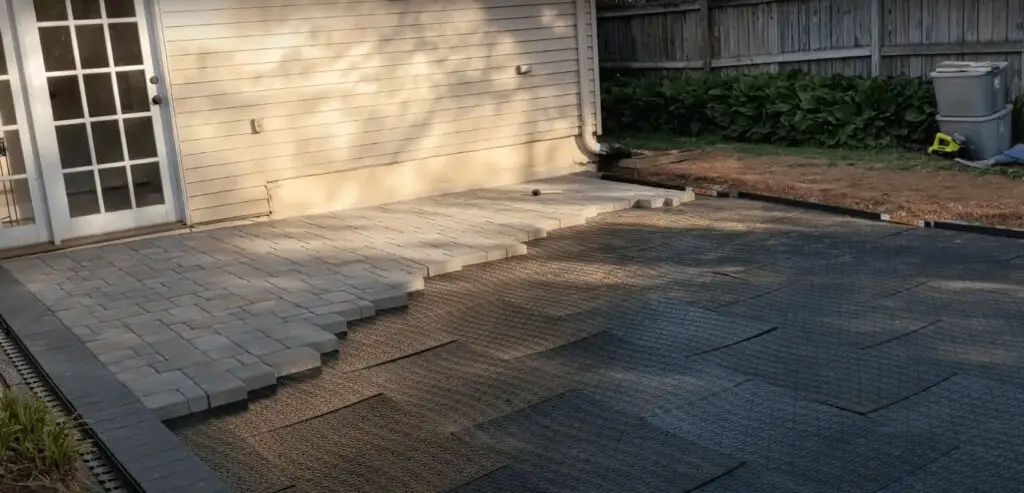
Lay the pavers 1 at a time, making sure they're level and that at that place's infinite between each of them to allow for water drainage; make sure y'all take enough blocks on hand before showtime this process so you lot don't run out in the eye!
Keep adding more layers until your desired height is reached. Be careful non to pace or leap on any paver blocks equally it volition cause harm.
Make full every pigsty with dirt then rake over again until evened out. Remove all stakes marking trees and other obstacles ahead of time to avert dissentious roots after when edifice over
acme of them (read up near how deep these should be buried depending on where they are).
Later on finishing steps one through four, nosotros recommend waiting ii to six weeks earlier staining your paver patio.
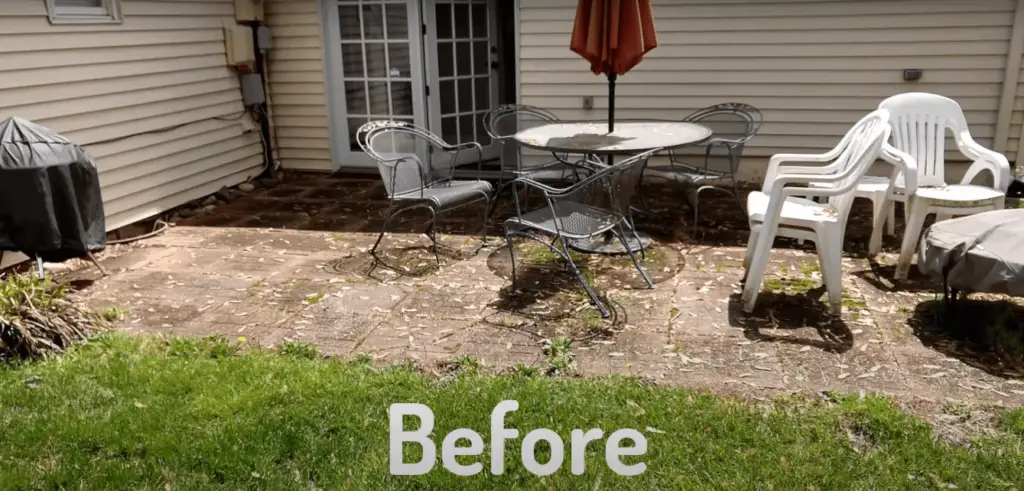
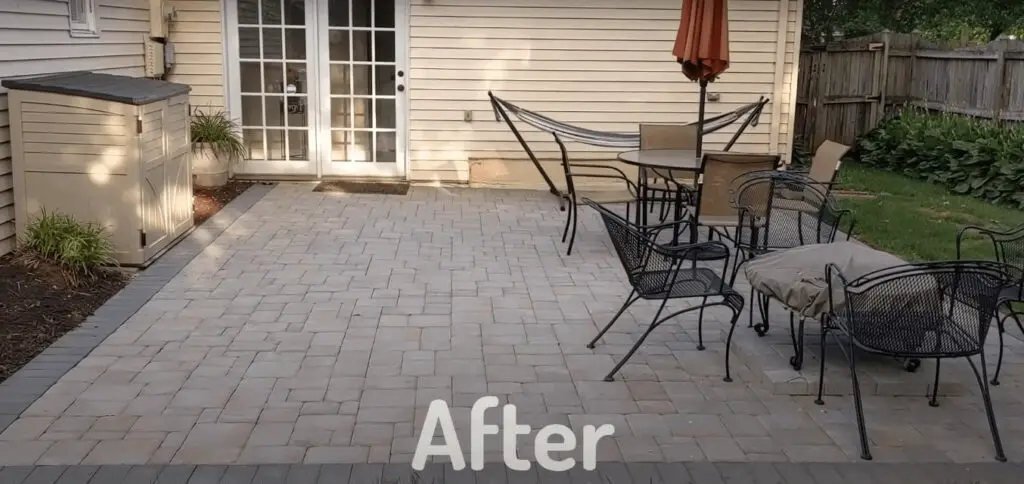
The steps to building a paver patio on a sloped grand are the following:
- Mark out where y'all will build with string and hose
- Excavate ground for pavers using advisable tools (sledgehammer)
- Lay gravel layer as drainage
- Dig holes at equal distances from each other and in right sizes
- Put pavers one by 1 until desired summit is reached and so fill every hole up with clay and rake over again.
- Wait ii-6 weeks later on finishing earlier applying sealant or pigment of choice.
Can you build a patio on a slope?
Yes, you tin can – and the best part is that it'due south not too expensive to build a patio on a slope.
All yous need are some basic tools such as shovels, wheelbarrows, levelers, or pry confined. A popular cloth for patios is physical pavers which are easy to install but will require heavy machinery if your slope is steep.
If this sounds like something you want to exercise yourself so here are some tips:
- Determine whether your garden has enough infinite for new paving stones; otherwise simply add them in an existing area of the garden where there isn't any landscaping nonetheless
- Brand sure the soil slopes abroad from buildings and driveways and then water won't pool underneath (this can crusade severe damage to the construction)
- Choose a slope that has been prepped for paving stones and mark out your patio area, using stakes or hose pipes.
- This volition ensure you have enough room for all of the necessary steps in this process; too keep in heed that these measurements demand to be taken from the ground up so if there is an existing walkway and then decrease it from your measurement.
- Your new patio should extend at least one foot on every side beyond where you want paved stones laid down (to accommodate joints).
What should the gradient exist on a patio?
A sloping patio should slope 1/8″ (3mm) per running foot. By and large, a four″ (100mm) thick slab fix 2″ above basis level is sufficient.
Slopes greater than 45 degrees will require some form of retaining wall to prevent the slope from condign likewise steep.
Retaining walls are typically made out of concrete or stone; however, any material can exist used as long every bit it meets code requirements and limitations.
How do yous calculate the slope of a paver patio?
Yous can summate the gradient of a paver patio by drawing 2 perpendicular lines. One line should be drawn beyond the summit and bottom edge, while the other is forth each side.
You then accept to measure out upwardly from either end until you lot get an equal measurement. The difference in those measurements will give you lot an idea of how steep it is going to exist when installing pavers for your patio.
For example, if 1 end was 3 inches higher than the other that would mean that there would be a three-inch drop every few feet on either side of where they intersected at ground level – non skillful!
In contrast, if both ends were even with 1 another this could indicate a flat surface which may work well for children or people with mobility issues who may have difficulty going upward and downwards hills.
caldwellolove1995.blogspot.com
Source: https://www.cleverpatio.com/how-to-build-a-paver-patio-on-a-sloped-yard/
0 Response to "when building patio what do you place next to the bricks on the end to keep bricks in place"
ارسال یک نظر